Donut Coin
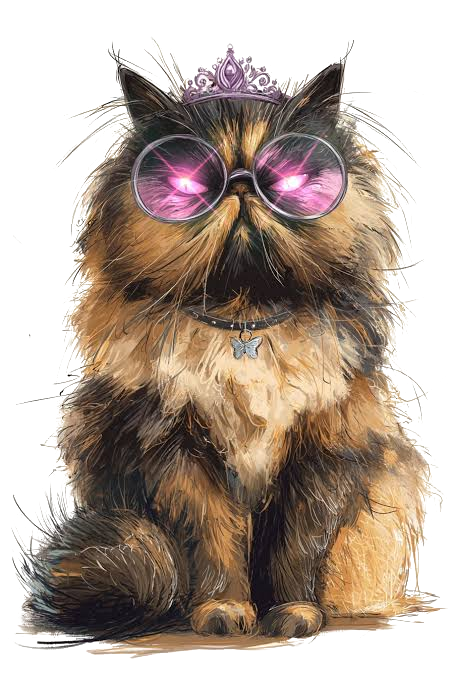
Princess Donut, the Queen Anne Chonk. No value, all fun.
How it works
Two pictures. The first is what a miner and a node do to make one block. The second is where your browser, your miner and the network sit relative to each other, and what each part is allowed to do.
1. Making a block
A miner asks a node for a template: the last block’s id, the current difficulty, the transactions waiting, and a coinbase paying 10,000 DONUT plus fees to the miner’s address. Each worker builds its own version of the block and hashes it with a different nonce, over and over, until the Scrypt hash falls under the target. That block goes to the node, which checks nine rules in order; if all pass, the node applies it, tells its peers, and every miner starts again on top of it.

2. Who talks to whom
Your browser talks to a public node through Cloudflare. It sends only signed transactions and signed market actions; the keys that sign them never leave your device. Your miner, if you run one, asks the same node for templates and hands back valid blocks; that is the whole permission system. Nodes trade blocks and transactions with each other and agree on the chain with the most work, within the checkpoint and cap rules. The operator’s own mining node is one of them and is not reachable from the internet.

The rules in one table
| Who | May | May not |
|---|---|---|
| Anyone on the internet | read everything; submit a signed transaction; submit a block with valid proof of work; hold an account; post and take market offers | change a node’s peers; spend, freeze or reset any wallet |
| A node’s operator | choose its peers; add a checkpoint to the code and release it | mint coins; move anyone’s coins; undo a payment |
| A miner | win blocks in proportion to its hashrate | rewrite anything at or below a checkpoint; replace more than the last 20 blocks |
| Units above the DONUT | base 10: Ribbon (1,000,000 DONUT), Tiara (10 Ribbons), Crown (10 Tiaras), Queen (10 Crowns) | |
| Note in a transaction | up to 280 characters, signed; coinbase tag up to 64 | |
| Who may write a note | from block 560: one note per block; a block found in the last 10,080 blocks; at least a Ribbon held; fee of at least 100 DONUT | |
| How big a block may be | at most 500 transactions, and 3,000 inputs and outputs across all of them; at most 2,000 inputs and 500 outputs in one transaction. Every input costs a signature check, so this is what bounds the work a block can force on every node | |
| Spending what you mined | from block 3,444, a mined coin is spendable after 21 blocks rather than 3. A reorg hands an ordinary payment back to the mempool; it destroys a coinbase, so spending one too early can lose the person you paid their money. 21 is one past the deepest reorg any node will accept | |
| What a node chooses, not the rules | this node builds blocks up to 2,250 inputs and outputs, refuses to relay outputs under 0.01 DONUT, and holds at most 5,000 waiting transactions. These are policy, not consensus: a block breaking them is still valid, and anyone running a node may set their own without a fork |
The white paper has the numbers behind every rule, and the code is short enough to read in an evening.